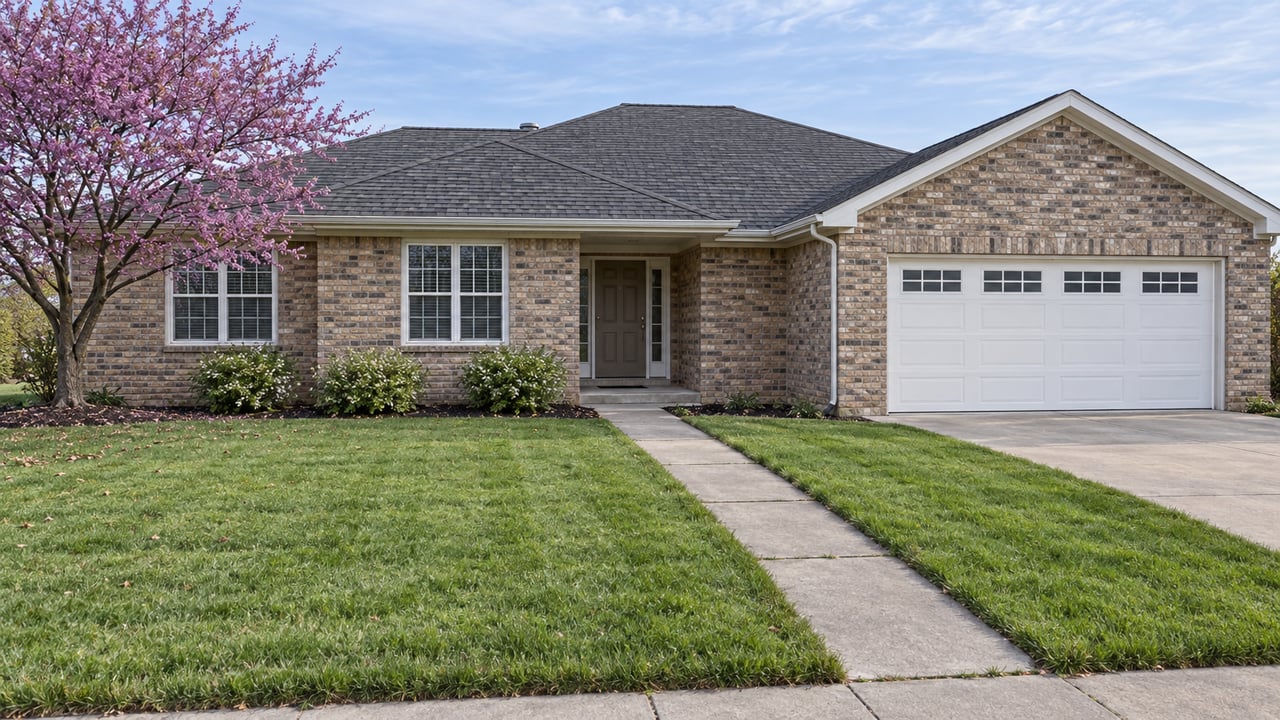
Algonquin's County Line Runs Through Backyards, and It Runs Through Your Closing Costs Too
October 1, 2026
October 1, 2026
There is no fence, no sign, no change in pavement color. Drive through Algonquin and you will not see the line that splits the village between McHenry County and Kane County. It shows up somewhere else entirely: on your property tax bill, on the letterhead of the assessor who reviews your appeal, and in some cases on the name of the high school your kids will attend.
About 78 percent of Algonquin sits in McHenry County. The rest, concentrated on the village's eastern edge including the Algonquin Lakes area, falls in Kane County. Two houses built the same year, by the same builder, at the same price point, can end up on opposite sides of that line without either owner noticing until the tax bills arrive and look different.
The practical effect of the county line has nothing to do with village services. Algonquin's Community Development Department handles permits and inspections the same way regardless of which county a property sits in. Where the line matters is upstream, at the level of who assesses your home's value and who hears your appeal if you disagree with it.
McHenry County's effective property tax rate runs close to 2.18 percent. Kane County's runs closer to 2.05 percent. On a $419,000 home, the gap between those two rates works out to roughly $545 a year. That is not a one-time difference. It repeats every year you own the home, and it compounds over a typical seven-to-ten-year hold into a few thousand dollars that has nothing to do with the house itself and everything to do with which side of an invisible line it sits on.
The administrative split goes further than the rate. McHenry County and Kane County run separate Boards of Review, so an appeal filed by a homeowner in one county follows a completely different process, and a different calendar, than an appeal filed by a neighbor a few hundred yards away in the other county. Kane County typically mails assessment notices to reach homeowners by the middle of May. McHenry County runs its own separate timeline. A homeowner who assumes the whole village works the same way can miss a deadline simply by not knowing which office is supposed to be sending the notice.
If you are cross-shopping Algonquin listings, the county line is one of the first things worth checking, not something to discover after closing. Two homes that look identical in square footage, age, and asking price can carry different effective tax rates depending on which county's assessor has jurisdiction, and your lender's estimated escrow payment will only be accurate once that distinction is confirmed.
This matters most for buyers comparing homes near the eastern edge of the village, where the boundary actually runs. A listing in Copper Oaks or Willoughby Farms, both on the west side, sits solidly in McHenry County. A listing in Algonquin Lakes, on the east side, is Kane County. The tax line on a listing sheet reflects last year's bill under last year's assessed value, not necessarily what a new owner will pay once the sale reassessment posts. Confirming the county before you get attached to a specific house is a five-minute check that avoids a surprise on your first escrow statement.
Here is the part that catches people off guard even after they've sorted out the tax question. Community Unit School District 300 covers essentially all of Algonquin, on both sides of the county line, which leads a lot of buyers to assume "same district" means "same schools." It does not.
District 300 is a large district, based in Kane County and reaching into Cook, DeKalb, and McHenry counties, and it operates multiple high school feeder patterns within a single village. Willoughby Farms, on the west side of Randall Road, feeds into Jacobs High School through Westfield Community School. Algonquin Lakes, in the Kane County pocket on the east side, feeds into Algonquin Middle School and then Dundee-Crown High School, according to the elementary school's own feeder information.
That means a family comparing a home in Willoughby Farms against a home in Algonquin Lakes is not just comparing two neighborhoods and two counties. They are comparing two different high school assignments inside what both listings will describe, accurately but incompletely, as "District 300." The far western edge of the village adds a third variation: homes near Square Barn Road and the Huntley Road corridor fall under Consolidated School District 158 and feed Huntley High School instead of any CUSD 300 campus. Three feeder patterns, one village, and none of it visible from the county line alone.
The county and school patterns show up again when you look at how unevenly home values have moved across neighborhoods that otherwise look like close comparables. Among Algonquin subdivisions built in a similar era and similar price range, Copper Oaks has ranked first in five-year appreciation, with Gaslight North and Eagle Ridge close behind and Dawson Mill just after that. All of these sit on the west side, in McHenry County, feeding into Jacobs High School.
That does not mean homes on the Kane County side have performed poorly. It means that buyers treating "same construction era, same square footage, same asking price" as the full picture are missing the variable that local appraisers actually adjust for when pulling comps near this boundary: which high school feeder a specific address belongs to. Two homes that look like clean comparables on paper can require different comp pools once you account for school assignment, and that is exactly the kind of detail that gets lost in a portal search filtered only by price and bedroom count.
Over the three months ending in April 2026, Algonquin's median sale price sat around $415,000, up modestly from the same period a year earlier. The more telling number is time on market. Homes were taking about 68 days to sell in that window, up from roughly 55 days the year before. A separate estimate for the same ZIP code put average home values closer to $423,000, up about 4 percent year over year, so the two data sources do not land on an identical number, but they agree on direction: prices are still rising, just more slowly, and homes are sitting longer than they were twelve months ago.
That slower pace works in a buyer's favor in exactly the way this post has been describing. When homes were moving in under two months, there was little time to check which county a listing sat in or which high school it fed before making an offer. With days on market stretching out, there is room to actually confirm those details before you write an offer instead of after you've already won a bidding war.
For buyers looking at properties just outside Algonquin's village limits, the county line adds one more layer. Inside the village, plumbing and building permits run through Algonquin's own Community Development Department regardless of county. On the unincorporated fringe just beyond the village boundary, a private well or septic system is permitted through whichever county's health department has jurisdiction, and the two sets of requirements are not identical. It is a narrow case, relevant mainly to buyers considering acreage or older homes just outside the corporate limits, but it is one more instance of the same pattern: the line you can't see on the ground still decides which office you call.
None of this shows up in a median price headline, and none of it shows up on a listing photo. It shows up in the tax escrow line on your first mortgage statement, in the high school assignment letter that arrives the summer before your child starts ninth grade, and in the comp report an appraiser pulls when your loan goes to underwriting. For a village split this specifically between two counties and three school feeder patterns, the county line is not a footnote. It's one of the first things worth confirming about any Algonquin address you're seriously considering.
If you're comparing specific Algonquin listings and want to know which county and which school feeder a particular address actually falls under before you write an offer, the Currey Koertgen Team can pull that detail alongside the comps.
Whether you're buying, selling, or investing, we’re here to help you navigate the market with confidence. With expert negotiation, strategic marketing, and a client-first approach, we’ll get you the best results.