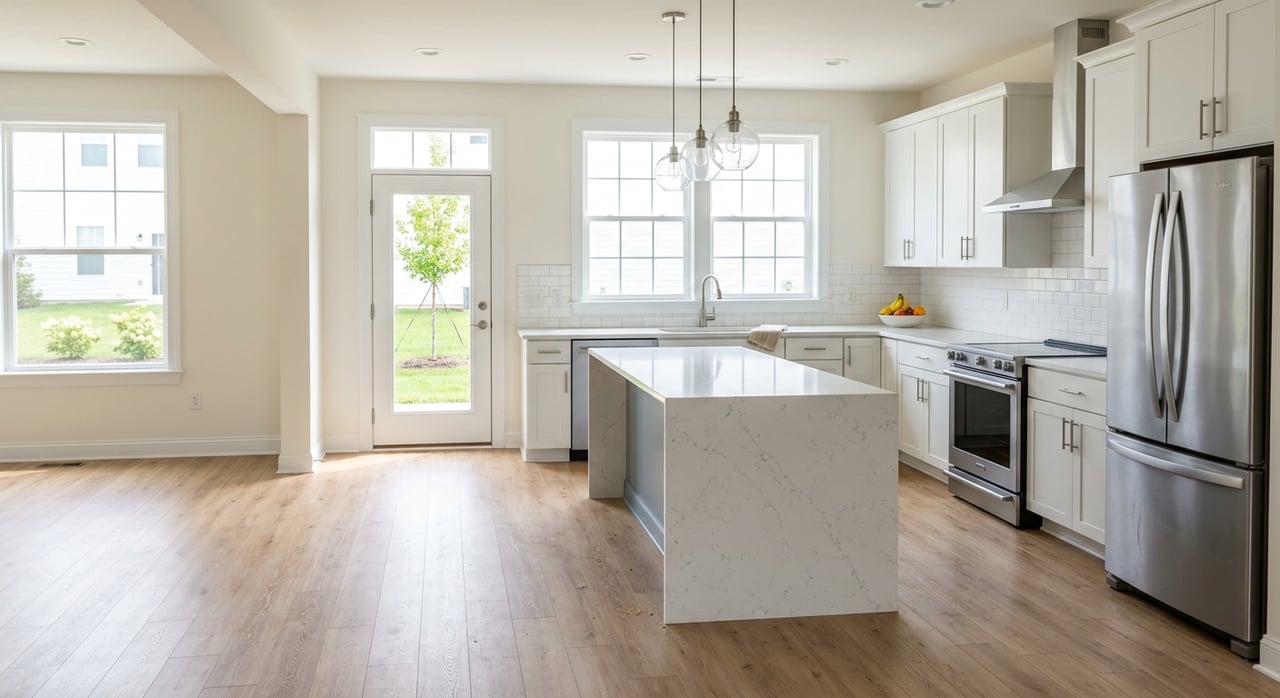
Hampshire IL New Construction: A Smart Buyer’s Guide
June 18, 2026
June 18, 2026
Wondering whether a brand-new home in Hampshire is the right move for you? If you are comparing shiny model homes, quick move-in listings, and established resale options, it can be hard to tell what is actually available now and what still depends on future phases. This guide will help you understand how new construction in Hampshire works, what buyers should compare carefully, and where timing, pricing, and local approvals can shape your decision. Let’s dive in.
Hampshire continues to attract attention from buyers who want newer homes with more space and a suburban setting that still offers regional access. The village highlights its location near the I-90 corridor, roughly 45 highway miles from Chicago, with proximity to O’Hare, Rockford International Airport, and Metra’s Big Timber station.
That access helps explain why builders are active here. The village also notes that it has more than 1,000 acres of vacant land available for development and that home builders are active in two subdivisions, which signals ongoing growth rather than a built-out market.
Right now, Prairie Ridge is the main active focus for new single-family construction in Hampshire. Current builder activity there gives you a useful snapshot of the local choices available if you want a newer floor plan, updated finishes, and community amenities.
Ryan Homes markets Prairie Ridge as Hampshire’s lowest-priced new homes, with included basements and 3-car garages. Its Prairie Ridge sections are shown from the low $300s to the low $400s depending on the product, with features such as all appliances included, up to six bedrooms, and quick move-in options.
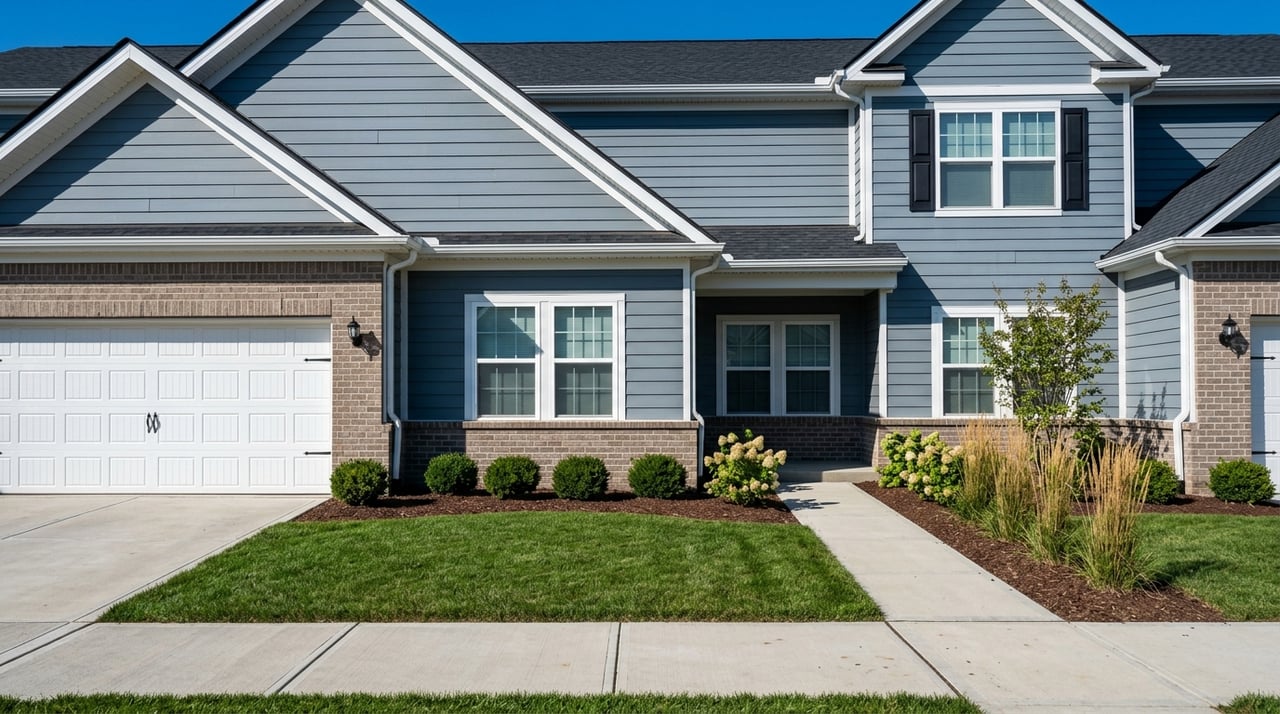
D.R. Horton is also active in Prairie Ridge with more than one product type. Its townhome offering is a lower-maintenance, three-story option with about 1,579 to 1,756 square feet, 2 to 3 bedrooms, 2.5 baths, a 2-car garage, quartz countertops, stainless-steel appliances, and smart-home technology, with pricing listed around $289,990 to $309,990.
D.R. Horton also offers traditional single-family homes in Prairie Ridge. Those homes are listed around 1,561 to 2,600 square feet with 3 to 4 bedrooms, 2.5 baths, flex rooms, upper-level laundry, and smart-home features, with pricing in the high $300s and up.
If you are choosing between new construction options in Hampshire, it helps to think in terms of lifestyle, maintenance, and timeline.
| Home type | What to expect |
|---|---|
| Townhomes | Lower-maintenance living, attached garage, updated finishes, and a smaller footprint |
| Single-family homes | More space, more bedrooms, basements in some communities, and stronger separation from neighbors |
| Quick move-in homes | Faster timeline with less customization, but less waiting and fewer construction unknowns |
| Pre-construction homes | More ability to choose finishes and floor plans, but more moving parts and timeline risk |
For many buyers, the real tradeoff is customization versus certainty. A home that has not started yet may offer more choices, while a quick move-in home may reduce the stress of waiting through construction and inspections.
One of the most important things to understand about Hampshire new construction is that community growth is happening in phases. Village development pages show revised preliminary development plans and annexation-related approvals for Prairie Ridge North, along with an approved resubdivision plan for Oakstead.
That means a builder’s marketing timeline is not the only timeline that matters. Homesites, release dates, and closing expectations may also depend on municipal approvals, infrastructure progress, and engineering work.
For you as a buyer, this matters because a community can be announced and actively marketed before every phase is fully ready. If you are trying to align a move with a lease ending, a home sale, or a school-year transition, it is smart to ask what is approved now versus what is still tied to future development steps.
Hampshire contracts plan review and building inspections to SAFEbuilt. The village states that permits must be obtained before scheduling work, and a separate public works permit may be required when utilities, right-of-way areas, or grading are affected.
The village also indicates that it uses the 2018 International Building and Residential Codes with local amendments. In addition, developers must comply with the Kane County stormwater ordinance and obtain a stormwater permit after engineering review.
You do not need to manage these approvals yourself when buying from a builder, but you should understand how they affect your timeline. Local review can involve annexation, subdivision plats, engineering review, traffic studies, and stormwater documentation, all of which can influence when a phase is actually ready for construction or closing.
New construction timelines often look simple on the sales sheet, but real-life timing can shift. Builder materials for D.R. Horton note that design selections may have cutoff dates, some homes may already be under construction when you sign, and completion dates are tentative.
Common delay factors include weather, material deliveries, labor availability, scheduling, and inspections. Ryan Homes also markets quick move-in opportunities, which may appeal to buyers who want to avoid the uncertainty of a full build timeline.
If timing matters, ask direct questions early. It is better to understand the realistic delivery window upfront than to plan around the most optimistic estimate.
A model home can make every option feel appealing, so it helps to compare details line by line. In Hampshire, buyers should pay close attention to the following:
These questions can help you compare two homes that may look similar at first but carry very different costs, timelines, and protections.
New construction buyers in Hampshire should give property taxes extra attention. Kane County states that assessments are based on fair cash value and that assessed value is 33.33 percent of that amount, and it specifically identifies new construction and property improvements as assessment events.
The Kane County Treasurer also notes that property taxes stay with the property regardless of ownership. That means you should confirm estimated taxes and how prorations will be handled before closing, especially if the home is newly built and the full assessment may not yet reflect the completed property.
This is one area where buyers can get surprised if they focus only on the mortgage payment shown in builder marketing. A careful review of tax estimates helps you plan for the full monthly cost of ownership.
If school boundaries are part of your move, verify them by exact address. District 300 states that Hampshire is part of the district and that feeder patterns are address-specific.
The district also has posted proposed boundary changes related to Hampshire High School and Jacobs High School in 2024 and 2025. Because of that, it is important not to rely on a general community description alone when comparing one homesite to another.
Even when you buy directly from a builder, you still need to protect your side of the transaction. The CFPB advises buyers to consider financing and inspection contingencies, notes that builders may request an upfront deposit on homes not yet built, and says buyers do not have to use a builder’s affiliated lender.
That gives you room to compare loan options and make sure the purchase structure fits your comfort level. A builder incentive can be attractive, but it should be weighed against the full terms of the loan and your overall flexibility.
A new home warranty is a major part of your purchase, so read it carefully before closing day. The FTC says builder warranties on new homes generally include one-year coverage for workmanship and materials, two-year coverage for systems such as HVAC, plumbing, and electrical, and sometimes 10-year coverage for major structural defects.
The FTC also recommends filing claims in writing and keeping records. D.R. Horton’s materials reflect that general structure in practice with a one-year limited warranty plus a separate ten-year limited structural warranty.
The key point is simple: do not assume all builder warranties are identical. Ask for the warranty booklet, review the claim process, and understand what is covered, for how long, and what your responsibilities will be after move-in.
For many buyers, the best choice is not automatically new construction or resale. It depends on what you value most.
A new home may offer modern layouts, newer systems, community amenities, and the appeal of being the first owner. In Hampshire, some options also include features that buyers often want, such as basements, 3-car garages, smart-home technology, and quick move-in availability.
A resale home may give you a more established setting, a faster closing path, and fewer unknowns around construction timing. It may also let you compare the exact property taxes, lot, and condition in a more immediate way.
The right move often comes down to your timeline, budget, tolerance for change, and how much customization you want. That is where local guidance can make the comparison clearer and less stressful.
If you are weighing new construction, quick move-in homes, or resale options in Hampshire, the right strategy is to look past the model-home polish and compare the details that affect your move most. The Currey Koertgen Team can help you evaluate local options, understand the tradeoffs, and move forward with more confidence.
Whether you're buying, selling, or investing, we’re here to help you navigate the market with confidence. With expert negotiation, strategic marketing, and a client-first approach, we’ll get you the best results.